Ferrari Luce: First Electric Ferrari — HD Photos, Specs & Image Gallery
Few moments in automotive history carry the weight of what happened in Rome on May 25, 2026.
Seventy-nine years to the day after Franco Cortese steered the Ferrari 125 S to victory at the Gran Premio di Roma — the race that inaugurated the Ferrari legend — the prancing horse was reborn. Not with a roar. Not with the intoxicating howl of a V8 or the operatic wail of a V12. But with silence, and with light.
The Ferrari Luce is the first production electric vehicle in Ferrari’s history. It is also the brand’s first five-seat car, its first four-door, its first liftback, and its most expensive road car in a generation. Designed in collaboration with Jony Ive’s creative collective LoveFrom alongside Ferrari’s own Centro Stile, the Luce represents nothing less than a complete reimagining of what a Ferrari can be.
This is its story — in images, in detail, and in the numbers that define it.
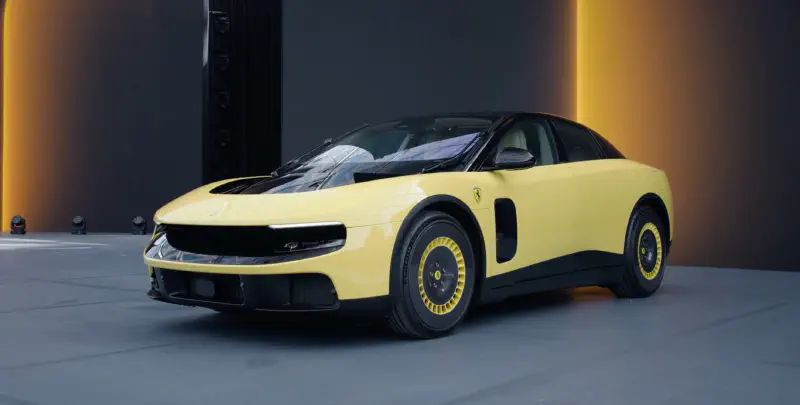
What Is the Ferrari Luce?
The Ferrari Luce — whose name means “light” in Italian — is a battery-electric executive saloon produced by Ferrari S.p.A. in Maranello, Italy. Internally designated as the Type F222, it is Ferrari’s first production electric vehicle and its first five-seat model in the company’s 79-year history.
The Luce is a 5-door liftback saloon with coach doors on the rear. At 5,026 mm long, 1,999 mm wide, and 1,544 mm tall, it is a substantial automobile by any measure — and yet it carries its scale with the visual composure of a much smaller car.
The price: €550,000 in Europe, approximately $640,000 in the United States. Customer deliveries are scheduled to begin in the fourth quarter of 2026.
Ferrari Luce HD Photo Gallery
Ferrari Luce Latest Photos — Official 2026 Reveal Images
The official reveal of the Ferrari Luce took place at the Vela di Calatrava — Città dello Sport in Rome, a venue designed by Santiago Calatrava. The setting was intentional: Ferrari chose a building defined by structural innovation and architectural beauty to frame a car built on exactly those principles.
The photos below represent some of the finest Ferrari Luce images captured at and around the reveal event — from sweeping exterior profiles to interior details that reveal the depth of thought behind the design.
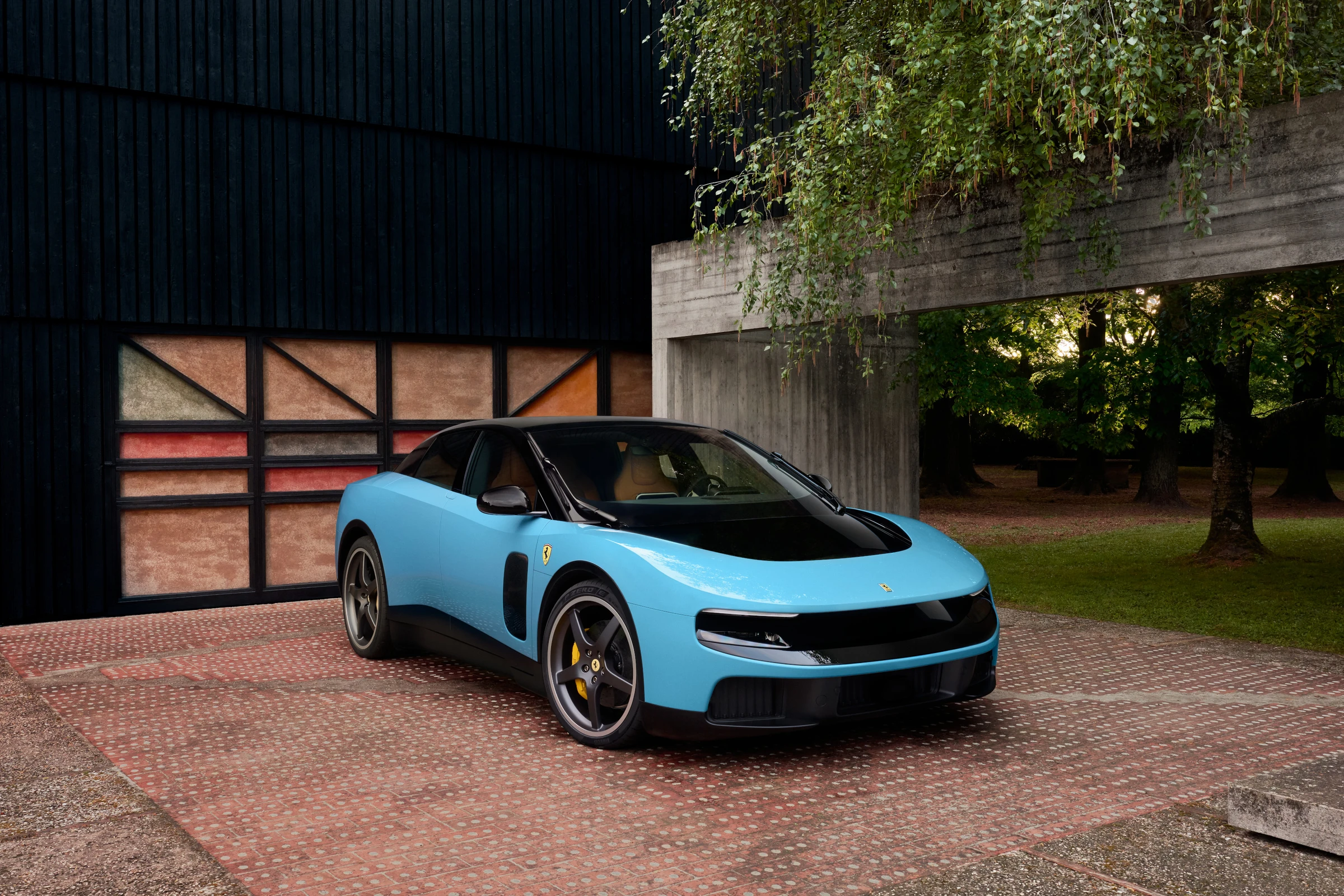
The exterior design of the Luce is unlike any Ferrari that has preceded it. Gone are the low, wide haunches of the traditional sports car silhouette. In their place: a taut, upright glasshouse that references the great Italian saloons of the 1960s while speaking an entirely modern design language. The glasshouse is vast, wrapping the occupants in light. The greenhouse’s geometry is the design’s defining element — and its most radical departure.
The paint seen here is one of several new finishes developed specifically for the Luce, each chosen to complement the car’s more vertical proportions and the interplay of glass and bodywork that defines its character.
Ferrari Luce Side Profile Photography
The side view of the Ferrari Luce is where the design makes its most definitive statement. The roofline rises sharply from the A-pillar and maintains its height before dropping gently toward the tail — a liftback shape that accommodates five passengers without compromising the car’s visual proportions.
The rear coach doors — hinged at the rear rather than the front — open in opposition to the front doors, eliminating the B-pillar entirely and creating a vast, unobstructed aperture for rear passengers. This is a configuration once reserved for coachbuilt luxury automobiles from Rolls-Royce and Bentley. Ferrari has brought it into the electric era.
Ferrari Luce Biography & History
The Decision to Go Electric
Ferrari announced its intention to develop a fully electric production car during its Capital Markets Day presentation on October 9, 2025. The announcement was accompanied by a design preview — not a full reveal, but enough to signal the scale of the project.
The decision was not taken lightly. Ferrari’s CEO Benedetto Vigna described it as a choice made only when the company was certain that an electric powertrain could deliver a driving experience worthy of the Ferrari name. “We will only electrify when we can make it feel like a Ferrari,” Vigna had said in prior investor briefings.
The result is the Luce: a car that uses its four electric motors not merely to move, but to create something the company calls Torque Shift Engagement — a control system that allows the driver to manage power delivery and regenerative braking through steering-column-mounted paddle shifters.
The right paddle cycles through five levels of torque delivery aggressiveness. The left paddle cycles through five levels of regenerative braking intensity. The system gives the driver a degree of granular control over the car’s character that no previous Ferrari has offered.
Ferrari Luce and the LoveFrom Collaboration
The exterior and interior design of the Luce emerged from an unprecedented partnership between Ferrari’s own Centro Stile and LoveFrom — the creative collective founded by Jony Ive and Marc Newson following Ive’s departure from Apple in 2019.
Ive and Newson are among the most respected product designers of the 21st century. Between them, they are responsible for the iPhone, the iPod, the Apple Watch, the iMac G4, the Aeron Chair rethink, and dozens of other objects that redefined what was possible in industrial design.
For the Luce, they brought to Ferrari what they have always brought to their work: an obsession with materials, a belief that technology should feel inevitable rather than intrusive, and a willingness to remove everything that does not need to be there.
The result is an interior of extraordinary restraint and tactile richness — more architecture than automotive, yet unmistakably Ferrari.
Ferrari Luce Front Detail Photos
Ferrari Luce Front End Photography
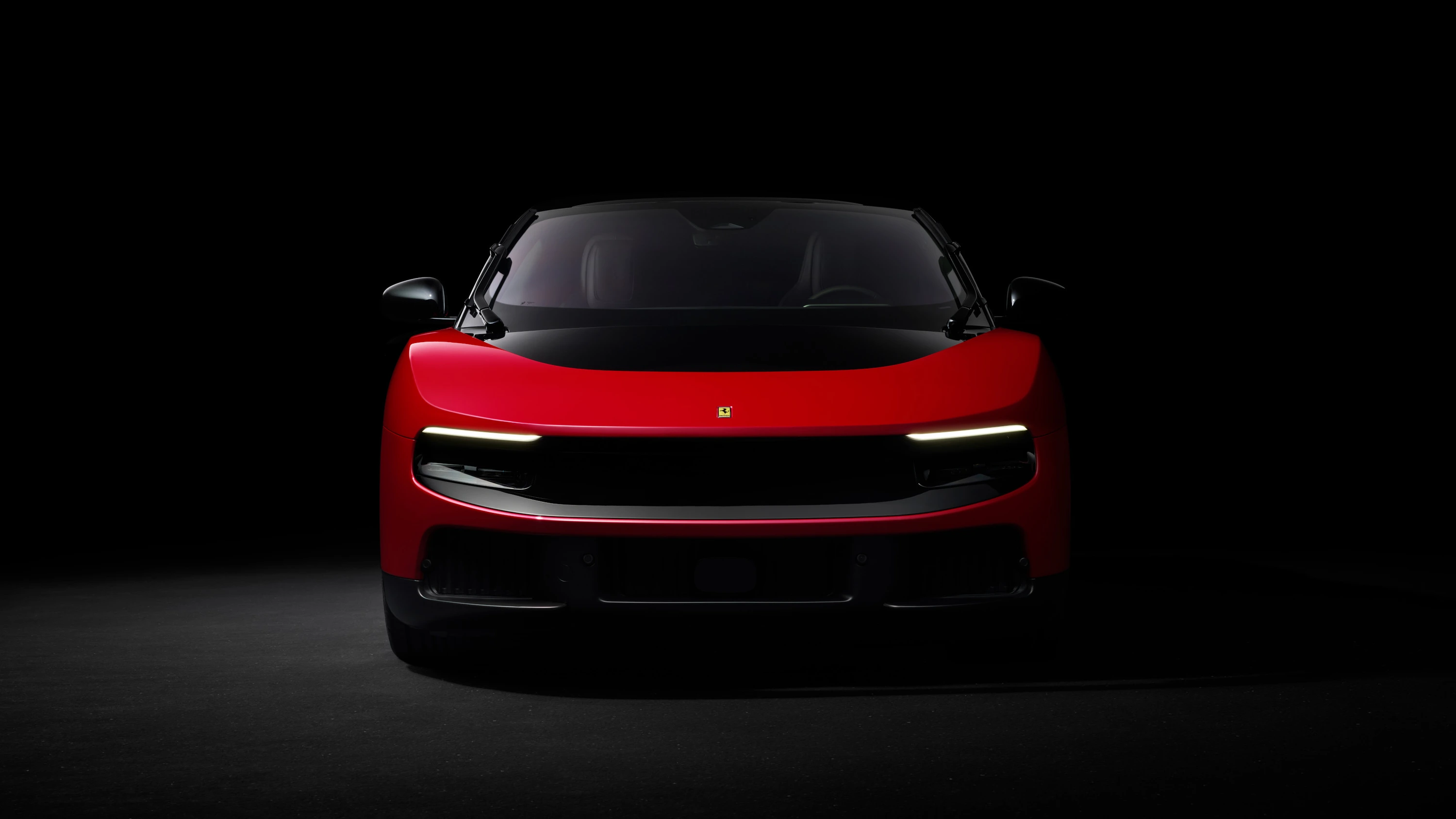
The front fascia of the Ferrari Luce is one of the most debated aspects of its design. There is no traditional grille in the sense that combustion-era Ferraris required — there is no radiator that demands airflow. Instead, the front of the car is a carefully composed surface in which the lighting graphic, the aerodynamic intakes, and the Ferrari badge are integrated as a single, unified element.
The headlight signature echoes the circular lamp housings of classic Ferraris — a deliberate visual nod to the 250 GTE and 330 GT 2+2, Ferrari’s two most famous four-seat cars of the 1960s. But where those lamps were simple sealed-beam units, the Luce’s lighting array is a complex optical architecture that generates a distinctive graphic at night.
The aerodynamics of the front end were developed in Ferrari’s wind tunnel at Maranello and refined through computational fluid dynamics. For an all-wheel-drive electric vehicle weighing just under 2,300 kg, aerodynamic efficiency is not an option — it is an engineering imperative.
Ferrari Luce Performance & Specifications
The Ferrari Luce is powered by four permanent-magnet electric motors — one at each wheel — with a combined output of 1,035 hp (772 kW).
The system is rear-biased: the two rear motors produce 831 hp and 524 lb-ft of torque, while the two front motors produce 282 hp and 207 lb-ft. Independent torque vectoring at each wheel allows the car to manage traction and cornering dynamics with a precision that no mechanical differential system can match.
Performance figures:
- 0–100 km/h: 2.5 seconds
- 0–200 km/h: 6.8 seconds
- Top speed: over 310 km/h (193 mph)
Battery and range:
- Gross capacity: 122 kWh (structural element of the chassis floor)
- Electrical architecture: 800V
- DC fast charging: up to 350 kW
- Range: over 500 km (311 miles)
The battery pack forms a structural element of the car’s chassis — it is not a component mounted within a frame, but part of the frame itself. This approach, borrowed from aerospace engineering, reduces weight and lowers the car’s centre of gravity simultaneously.
Dimensions:
- Length: 5,026 mm
- Width: 1,999 mm
- Height: 1,544 mm
- Wheelbase: 2,961 mm
- Weight: approximately 2,260 kg (4,982 lb)
Ferrari Luce Rear Lights Gallery
Ferrari Luce Rear Photography — Lighting Design
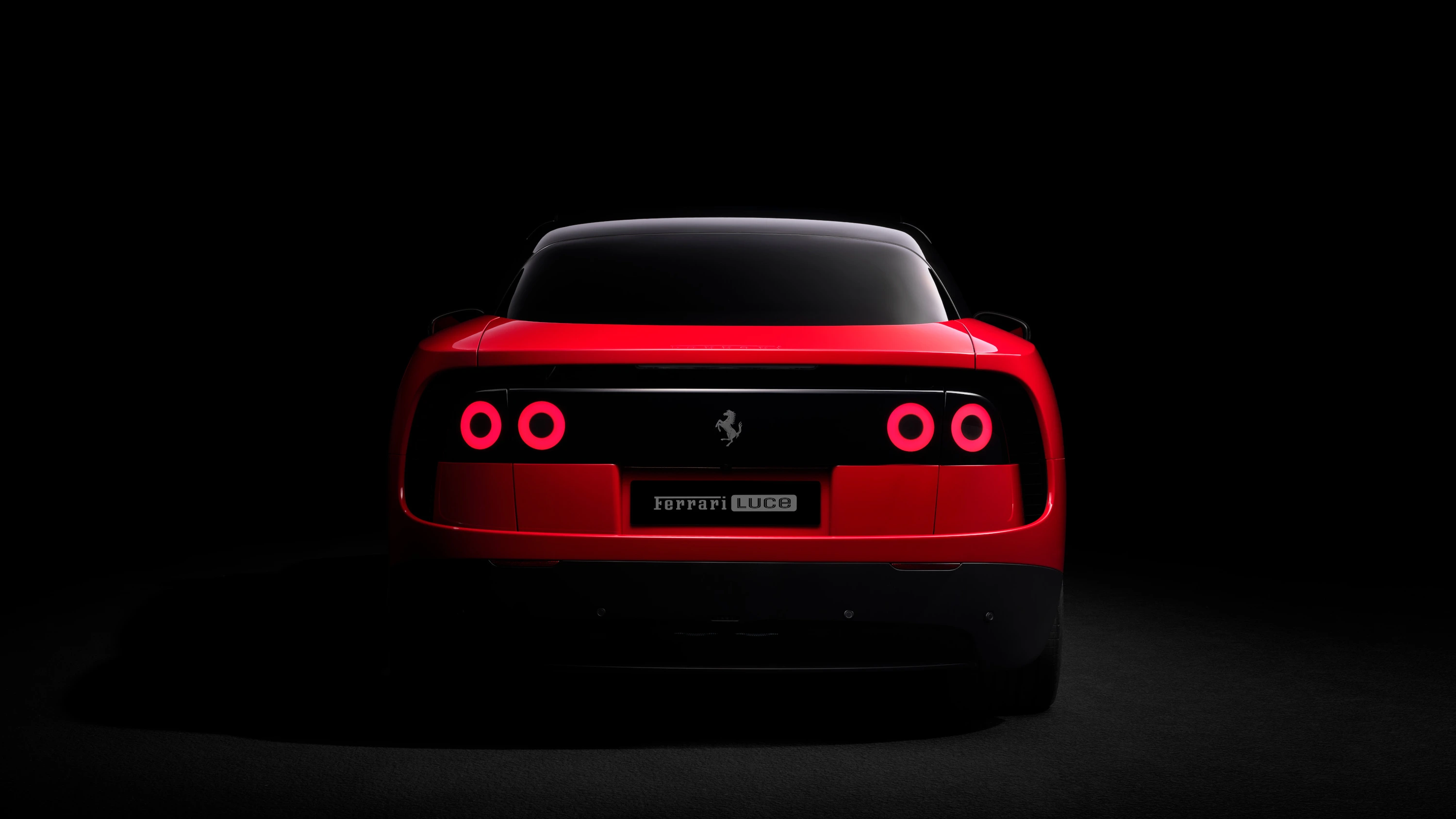
The rear end of the Ferrari Luce is as considered as the front. A full-width lighting bar spans the tailgate, uniting the tail lamps in a single horizontal graphic that recalls the horizontal light treatments of Ferrari’s Le Mans racing cars. The tailgate itself is a single piece of glass that opens upward, revealing a luggage compartment of 21.1 cubic feet — the largest boot capacity Ferrari has ever offered in a production car.
The Luce’s tail has attracted its share of critical commentary. Some observers find it too restrained — too saloon, too corporate, not Ferrari enough. Others argue that it represents exactly what a luxury electric Ferrari should look like: composed, contemporary, and confident in a way that does not need to shout.
Ferrari’s own position is clear. “We are not trying to pretend this is a sports car,” CEO Benedetto Vigna said at the reveal. “The Luce is a Grand Tourer in the truest sense — a car built for distance, for comfort, and for the pleasure of extraordinary performance.”
Ferrari Luce Interior Dashboard Photos
Ferrari Luce Interior Photography — Dashboard & Controls
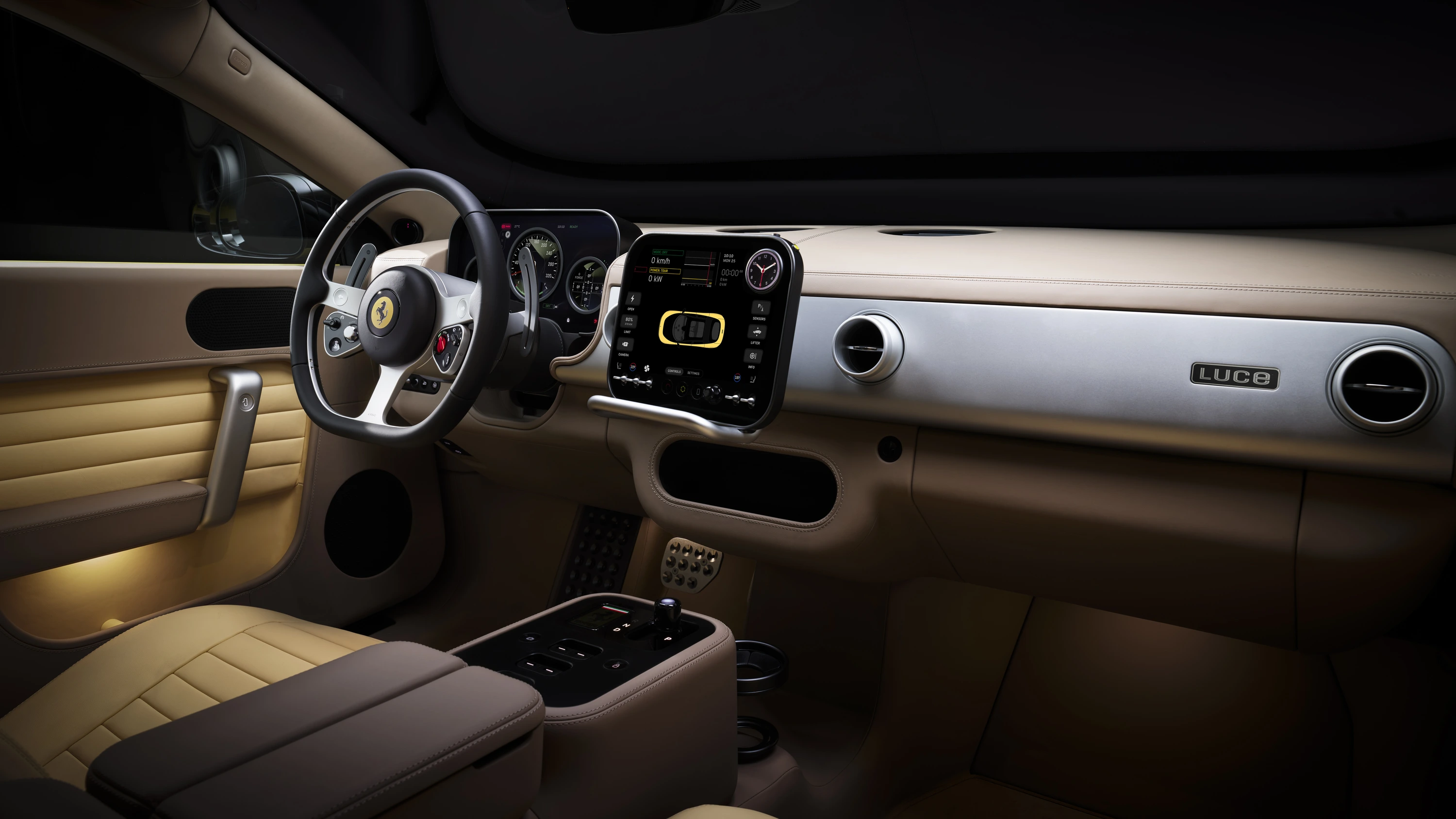
The interior of the Ferrari Luce is a masterclass in restraint. LoveFrom’s influence is evident in every surface: the absence of unnecessary controls, the priority given to material quality over feature quantity, the way the digital interfaces are integrated into the environment rather than layered over it.
The driver faces a curved display that presents driving information in a typography developed specifically for the Luce — precise, legible, and crafted with the same care as the car’s exterior graphics. The central console is a floating island of carbon fibre and leather, elevated above the floor to create a sense of space between the two front occupants.
The steering wheel is a departure from convention. The circular form — shared with the Luce’s electric peers — is trimmed in Alcantara and features the Torque Shift Engagement paddle shifters along its inner radius. The controls required by the driver are within the wheel; everything else is in the touchscreen or, increasingly, absent entirely.
Ambient lighting throughout the cabin is provided by a continuous light channel that traces the dashboard, door cards, and centre console — varying in colour and intensity based on the selected driving mode.
Ferrari Luce Interior Seat Photos
Ferrari Luce Front Seat Photography — Cabin Detail
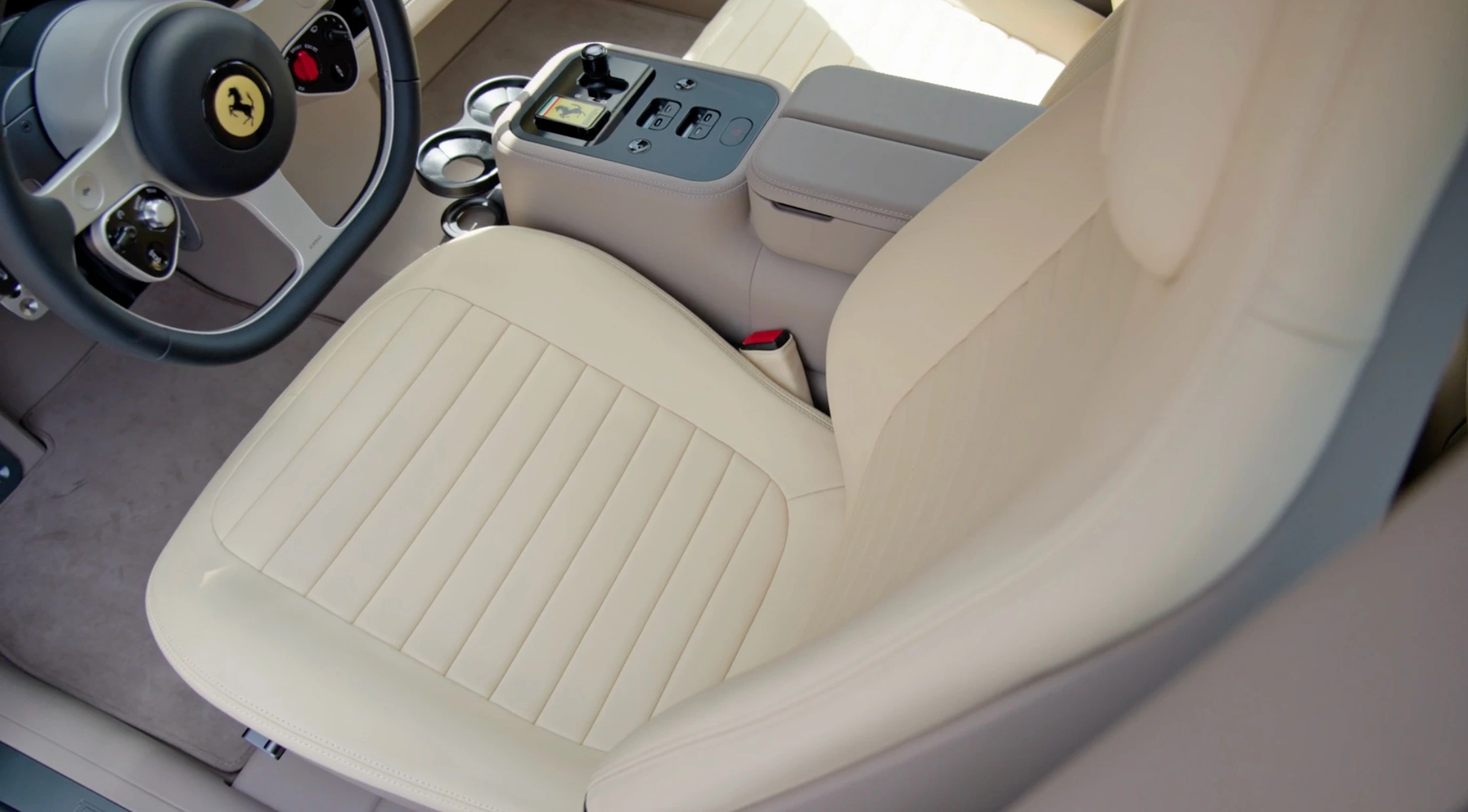
The seating of the Ferrari Luce reflects the car’s dual identity as both a performance machine and a luxury grand tourer.
Front seats are bespoke units developed specifically for the Luce — deeply bolstered for lateral support during performance driving, yet broad enough for comfort across long distances. They are trimmed in Schedoni leather, the Modenese leather house that has supplied Ferrari since the 1950s. Heating and ventilation are standard; massage is optional.
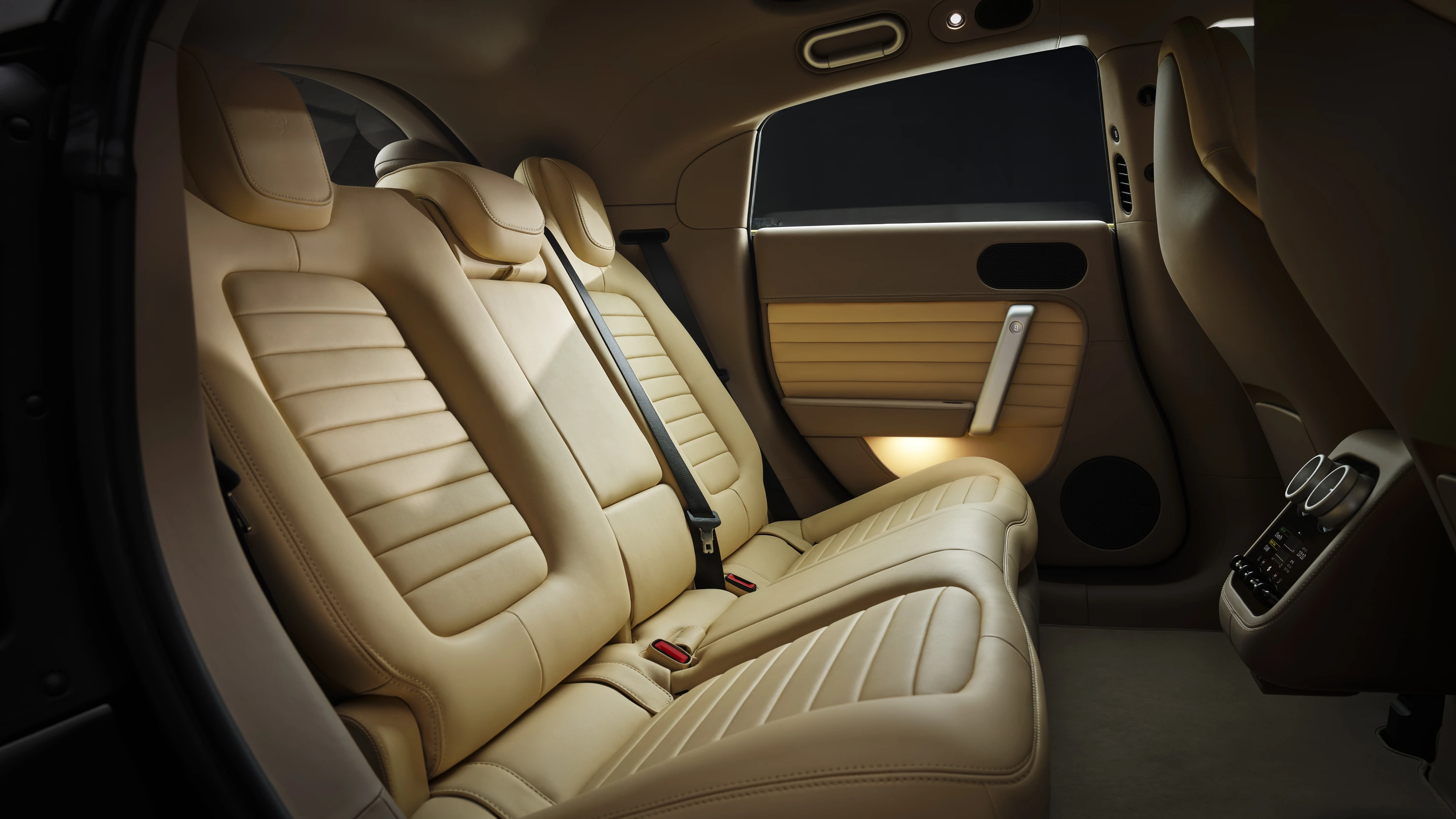
The rear bench is where the Luce makes its most dramatic departure from Ferrari tradition. For the first time in the company’s history, five people can sit in a Ferrari in genuine comfort. The rear seat is a true three-position bench — not the token “+2” accommodation that Ferrari’s previous four-seat cars offered, but a full-width seat with individual headrests and, critically, no transmission tunnel to compromise centre-rear legroom.
The coach doors that provide access to the rear cabin open to nearly 90 degrees, creating an entrance that feels more like a private salon than an automobile. Rear headroom is 40 mm greater than in any previous Ferrari production car.
Ferrari Luce Rear Coach Door Photos
Ferrari Luce Rear Door Open — Coach Door Photography
The coach doors of the Ferrari Luce are one of its most striking functional features. They are hinged at the rear of the door — opposite to the front doors — and open away from the centre of the car. When both front and rear doors are open simultaneously, the entire side of the car becomes a single unobstructed aperture. There is no B-pillar. There is only space, and light, and the interior beyond.
The rear coach door configuration required a significant structural engineering challenge. Without a B-pillar to support the roof structure and contribute to crash safety, Ferrari’s engineers developed a reinforced roof ring and door sill construction that meets European and American safety standards without relying on the pillar that traditional car bodies use as their primary safety element.
The solution involved high-strength steel and carbon fibre in the door frames and sills — an approach that adds weight where it must be added, but saves it elsewhere through the structural battery floor.
Ferrari Luce Powertrain Photos
Ferrari Luce EV Powertrain Photography — Four-Motor System
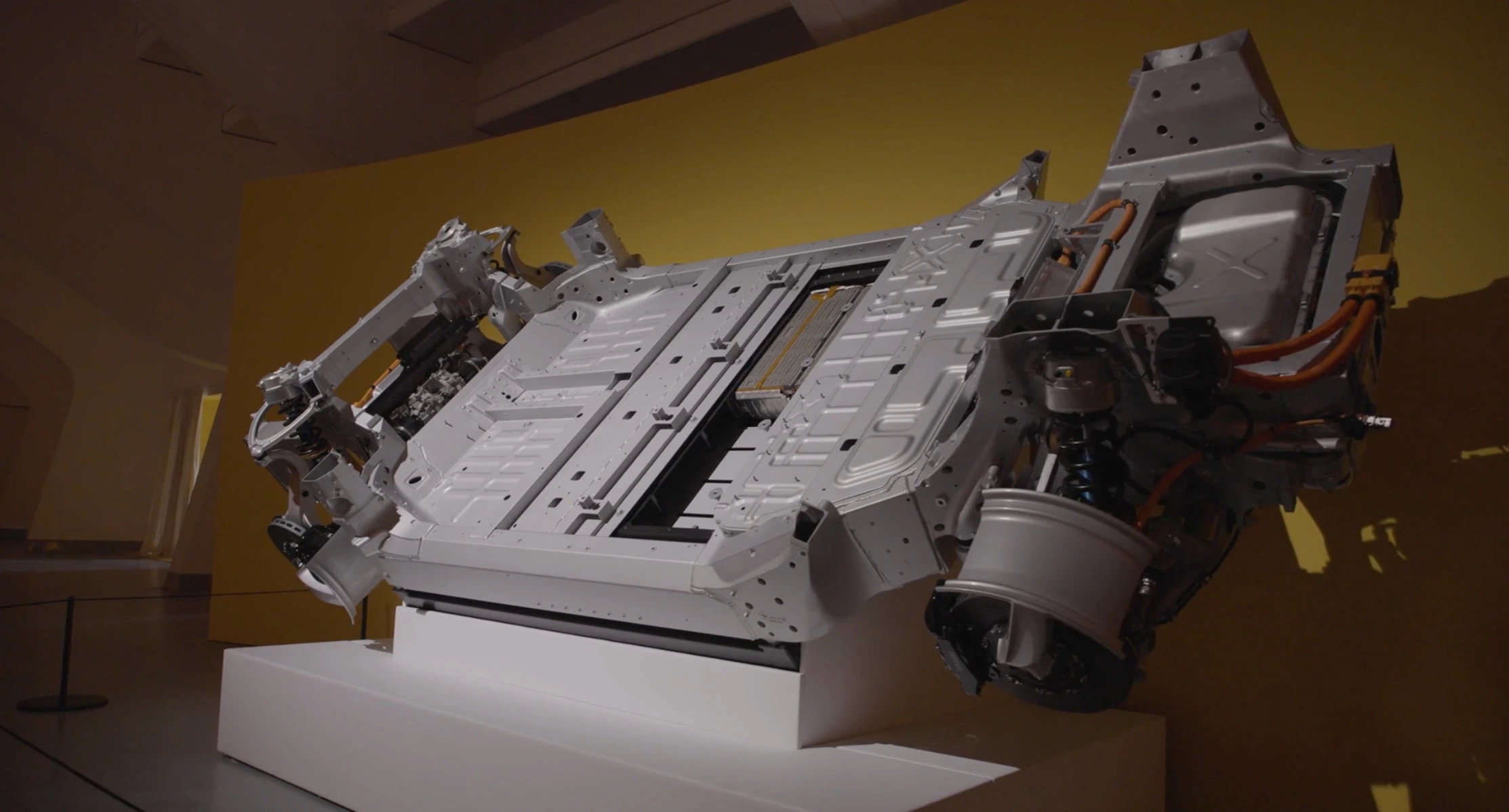
The heart of the Ferrari Luce is a four-motor electric powertrain that represents the most sophisticated drive system Ferrari has ever produced.
Each motor drives its own wheel through a single-speed reduction gear. The individual motor control system can modulate torque to each wheel independently and instantaneously — a form of torque vectoring that operates at a speed and precision that no mechanical differential can match. The system uses predictive algorithms informed by steering angle, yaw rate, lateral acceleration, wheel speed, and driver input to distribute torque in real time.
The 122 kWh battery pack — which forms a structural element of the chassis floor — uses an 800V architecture that enables DC fast charging at up to 350 kW. At this rate, the battery can be charged from 10% to 80% in approximately 18 minutes.
Ferrari collaborated with its powertrain engineering partners over a four-year development cycle to ensure that the Luce’s electric drive system delivered the character and responsiveness that the company’s customers expect. The Torque Shift Engagement system — which allows the driver to select from five torque delivery profiles and five regenerative braking levels using the steering-wheel paddles — is the primary interface through which that character is expressed.
Ferrari Luce Public Appearance & Event Photos
Ferrari Luce Rome Reveal — Official Launch Event Photography
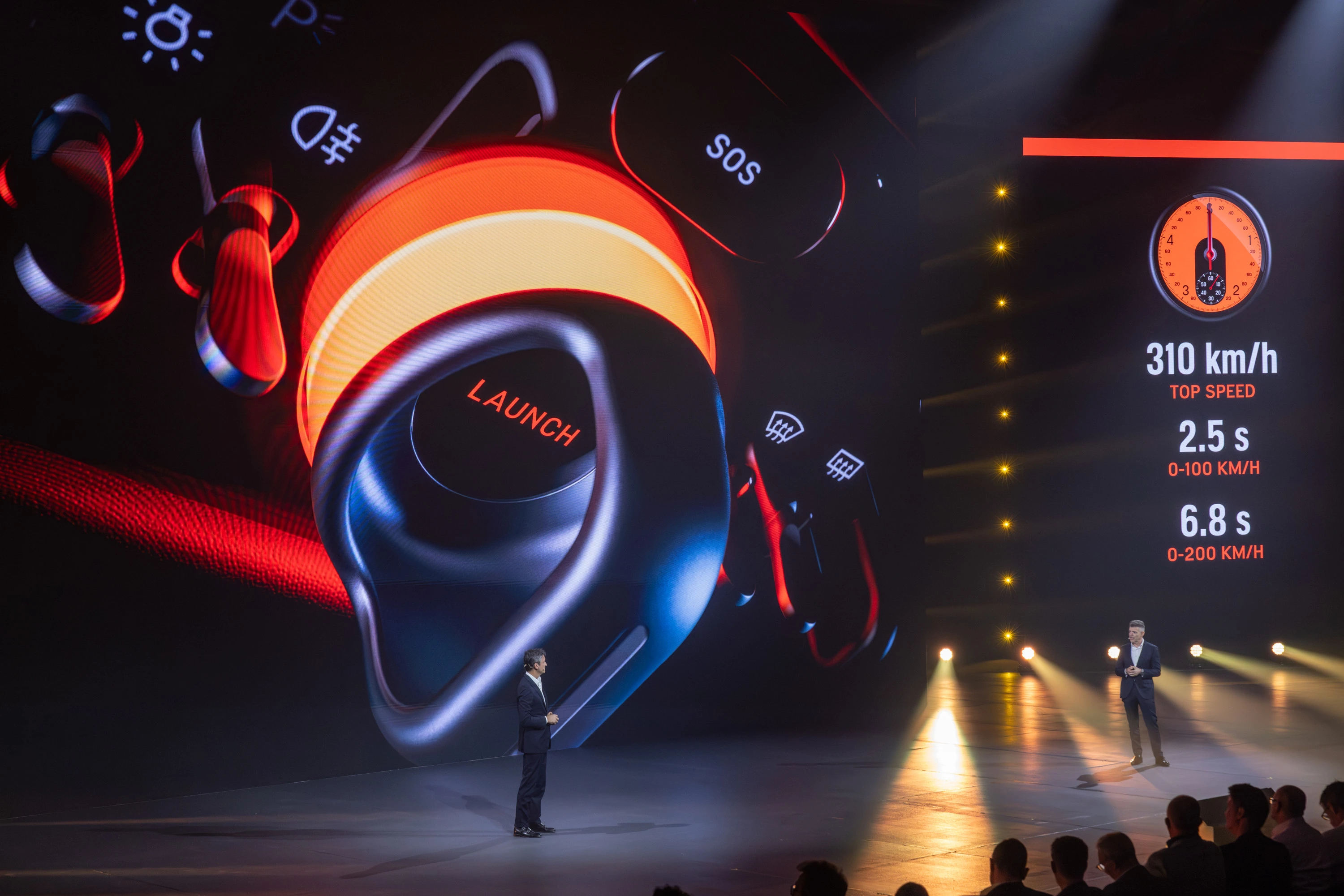
The world premiere of the Ferrari Luce on May 25, 2026, was a carefully choreographed event that drew press, invited clients, and Ferrari partners from across the globe to Rome’s Vela di Calatrava — the Calatrava-designed sports arena that sits on the northern edge of the city.
The date was chosen for its significance. Seventy-nine years earlier, on May 25, 1947, Franco Cortese had driven a Ferrari 125 S to victory at the Gran Premio di Roma — the first competitive victory for a car bearing the prancing horse badge. The Luce’s reveal on that anniversary was Ferrari’s way of framing the electric car not as a departure from its heritage, but as an extension of it.
Ferrari Chairman John Elkann and CEO Benedetto Vigna were both present at the reveal, alongside Jony Ive and Marc Newson from LoveFrom. Vigna spoke of the Luce as “the next step in a journey that began the moment Enzo Ferrari built his first car: the pursuit of the extraordinary.”
The event was livestreamed globally and drew millions of viewers. The Luce’s reveal segment trended across automotive media, social platforms, and mainstream news outlets simultaneously — a reach that no previous Ferrari reveal had achieved.
Ferrari Luce Overhead Photography
Ferrari Luce Aerial View — Top-Down HD Photos
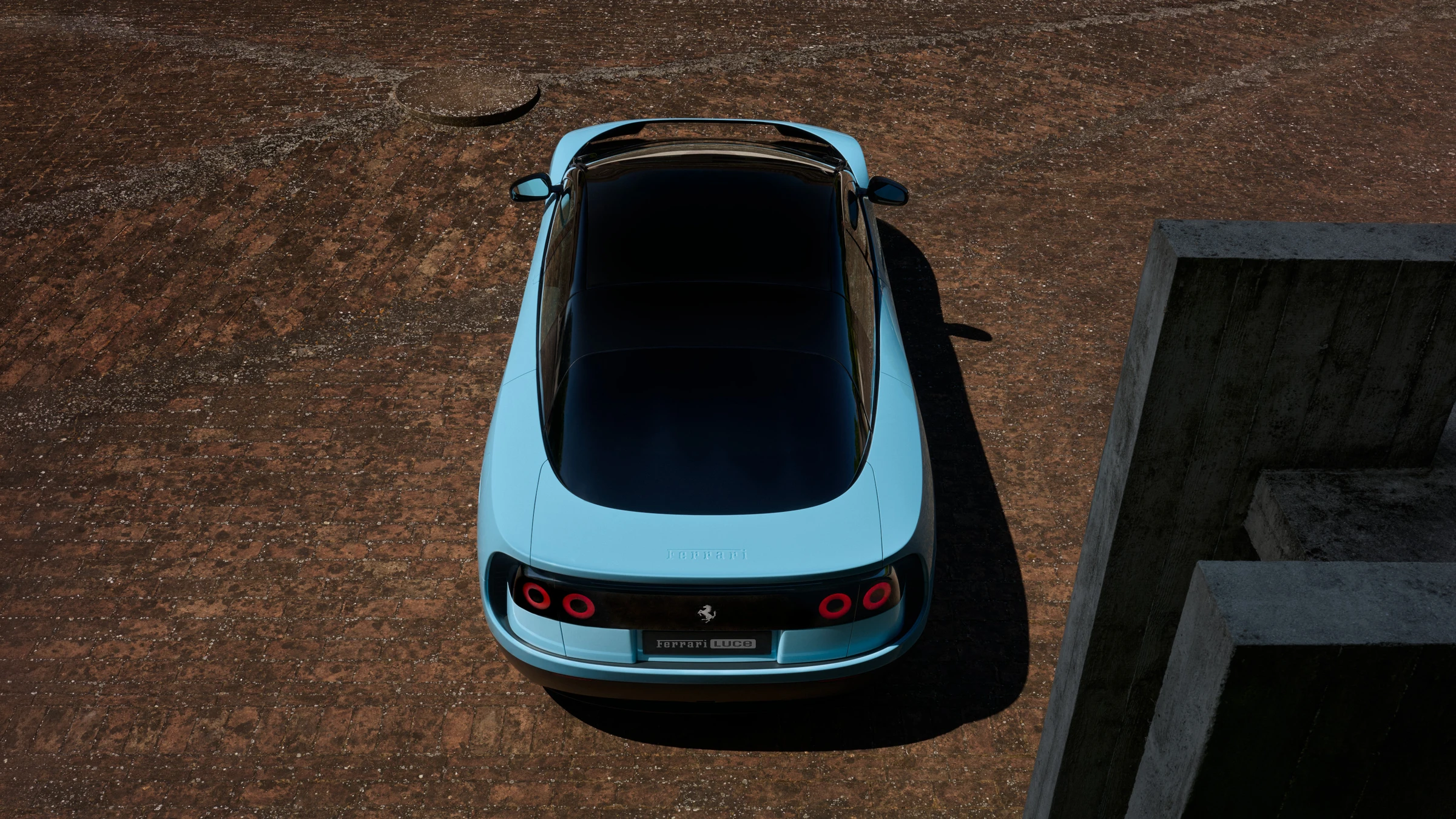
The overhead perspective reveals aspects of the Ferrari Luce that are invisible from the ground. The roof is nearly entirely glass — a panoramic canopy that floods the cabin with natural light and reinforces the car’s relationship with its name.
From above, the relationship between the Luce’s proportions becomes clear. The bonnet is long — surprisingly long for a car with no combustion engine beneath it — and the cabin is set rearward on the wheelbase. This proportion, borrowed from the great GT cars of the 1960s, gives the Luce a presence that belies its more upright roofline.
The rear deck slopes gently into the tailgate, maintaining a clean silhouette from every angle. Flush door handles, flush glass, and a carefully managed surface tension between the various body panels give the car its sense of sculptural unity.
Ferrari Luce Media Coverage & Reception
How the World Responded to Ferrari Luce
The reaction to the Ferrari Luce reveal was immediate, widespread, and divided.
Among automotive journalists who attended the Rome event, the dominant response was admiration for the engineering and the interior design, tempered by uncertainty about the exterior. The Luce’s silhouette — upright, long, and deliberately non-sporty — is a significant departure from every road car Ferrari has produced in its modern era.
Top Gear described it as “the most un-Ferrari Ferrari ever made, which is also the most Ferrari Ferrari ever made.” Car and Driver praised the powertrain and the interior while noting that the exterior “will require some adjustment from those who came to Ferrari through the 488 or the SF90.” Road & Track called it “an act of courage.”
The financial markets were less enthusiastic. Ferrari’s stock fell 8.4% in the trading days following the reveal announcement — a reaction that reflected investor uncertainty about how the Luce would affect Ferrari’s brand positioning and margins. Ferrari’s historical pricing power, analysts noted, is built on scarcity and performance associations that the Luce tests in new ways.
Ferrari’s own customers told a different story. The company confirmed that the Luce’s order book was substantially subscribed within the first week of the reveal — a figure it declined to specify precisely but described as consistent with the production volumes it has planned.
Ferrari Luce Image Gallery — Full HD Photo Collection
This complete Ferrari Luce image gallery brings together the finest photographs from the car’s official reveal, its design development process, and its first public appearances.
Each image in this collection represents a different dimension of the Luce: its exterior design language, its interior philosophy, its powertrain architecture, and the event that introduced it to the world. Together, they tell the story of a car that is — by any objective measure — unlike any Ferrari that has come before it.
The Ferrari Luce photos collected here have been selected for their resolution, their editorial quality, and their ability to capture the character of a car that is as much a work of design as it is a feat of engineering.
For enthusiasts who have followed Ferrari through the decades — through the Dino and the Boxer, through the Testarossa and the F40, through the Enzo and the LaFerrari — the Luce represents a profound test of what the prancing horse badge means. It is the most powerful, most spacious, most technologically advanced, and most expensive production Ferrari ever made. And it is, for the first time, entirely electric.
Whether that is a loss or a liberation depends, as it has always depended in Ferrari’s history, on where you are standing.
Ferrari Luce Key Facts at a Glance
| Specification | Detail |
|---|---|
| Full Name | Ferrari Luce (Type F222) |
| Manufacturer | Ferrari S.p.A., Maranello, Italy |
| Revealed | May 25, 2026, Rome, Italy |
| Body Style | 5-door liftback saloon |
| Seats | 5 |
| Designer | Ferrari Centro Stile + LoveFrom (Jony Ive, Marc Newson) |
| Motors | 4 × permanent-magnet electric (one per wheel) |
| Total Power | 1,035 hp (772 kW) |
| Battery | 122 kWh (structural) |
| Architecture | 800V |
| Fast Charge | Up to 350 kW DC |
| Range | Over 500 km (311 miles) |
| 0–100 km/h | 2.5 seconds |
| Top Speed | Over 310 km/h (193 mph) |
| Price (Europe) | €550,000 |
| Price (USA est.) | ~$640,000 |
| Deliveries | Q4 2026 |
| Length | 5,026 mm |
| Width | 1,999 mm |
| Height | 1,544 mm |
| Weight | ~2,260 kg |
Ferrari Luce Wallpapers — Download HD Images
The Ferrari Luce wallpaper collection in this gallery represents some of the finest automotive photography available of Ferrari’s first electric car. Each image has been curated for its visual quality, resolution, and composition — making them suitable for desktop wallpapers, editorial use, and high-quality printing.
All Ferrari Luce HD photos in this gallery are available at resolutions from 2,200 to 3,200 pixels wide — optimised for modern displays, retina screens, and 4K monitors.
Whether you are looking for a Ferrari Luce portrait image, a side-profile wallpaper, an interior study, or an event photograph from the Rome reveal, this collection covers every angle of Ferrari’s most important car in a generation.
All Ferrari Luce images featured in this gallery are sourced from editorial press photography and official media releases. Ferrari Luce is a trademark of Ferrari S.p.A. Images are used for editorial and informational purposes.